
When a parachute fails during an ejection, the human body is left entirely at the mercy of gravity. For a U.S. Air Force colonel falling through the night sky over Iran at an estimated 70 to 100 miles per hour, surviving the descent was a mathematical improbability. He struck the rocky desert floor with enough violent force to break his back, an arm, and a shoulder, alongside sustaining a sprained ankle and severe lacerations to his head and face. Yet, surviving this catastrophic landing was only the preamble to a grueling 50-hour evasion behind enemy lines.
The officer, identified publicly only by his mission call sign "Bravo" to protect his identity, was the weapons-systems officer aboard a two-seat F-15E Strike Eagle. The details of his survival and eventual extraction, recently detailed in a CBS 60 Minutes interview and confirmed by U.S. military command, represent one of the most complex combat search-and-rescue operations in modern American history.
The Shootdown and the Fall
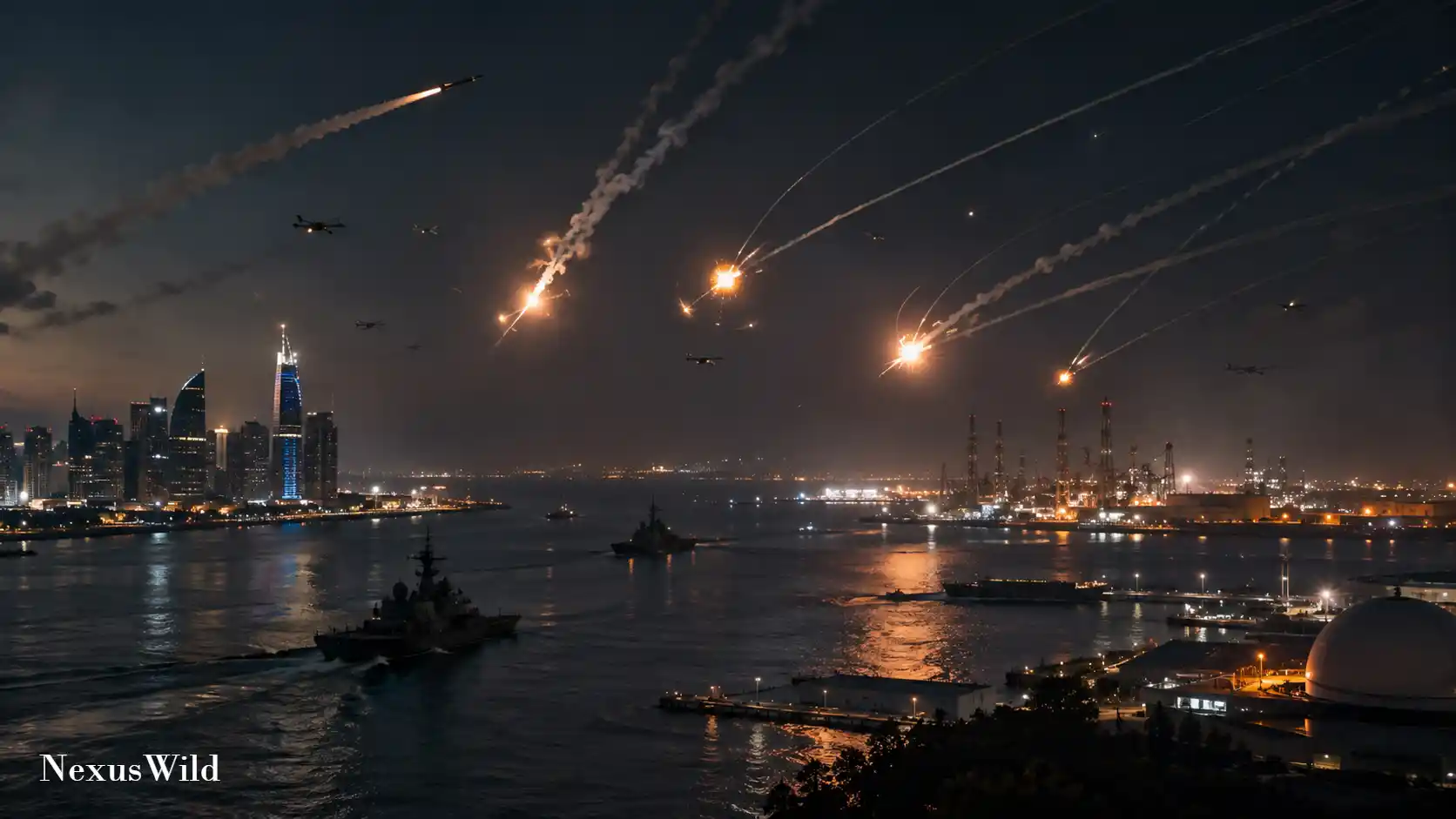
The incident occurred on April 2, 2026, amid the broader conflict initiated between the United States, Israel, and Iran in late February of that year. The F-15E, operating under the call sign "Dude 44," was tasked with striking industrial facilities connected to Iran's drone and missile programs. The target area was situated in a mountainous region south of Isfahan, near facilities where Iran is believed to store highly enriched nuclear material, though the nuclear site itself was not the intended target.
Despite U.S. forces having flown roughly 13,000 missions and establishing general air superiority, the airspace remained fiercely contested. The $30 million fighter jet was struck by an Iranian shoulder-fired missile, a weapon that costs roughly $100,000. Bravo likened the sudden impact to "getting hit by a freight train".
The pilot, operating under the call sign "Alpha," realized the aircraft was unsalvageable and initiated the ejection sequence, safely ejecting both men into the night. The two airmen were separated during their descent, ultimately landing about five miles apart. While Alpha's parachute deployed normally, Bravo’s canopy was severely damaged by the missile strike.
"At one point when I looked up and saw no parachute, that was the most terrifying thing I've ever seen," Bravo recalled. Hurtling toward the earth, he made a split-second plea: "So I paused, right then, and I prayed, 'Lord, your will be done. But if I'm getting through this, I need help'".
The 7,000-Foot Ascent
Bravo slammed into the high desert terrain at terminal velocity, suffering catastrophic blunt force trauma. Despite multiple fractures, he remained conscious. As daylight approached, he assessed his surroundings. He found himself in a steep valley flanked by cliffs - an incredibly vulnerable position for evasion. Knowing that Iranian ground forces would inevitably converge on the crash site, he concluded that the safest route was upward.
Operating on adrenaline and specialized survival training, he began a grueling hike toward a 7,000-foot ridgeline. This figure refers to the high-altitude vantage point he needed to reach to remain concealed within the mountainous terrain, rather than the vertical distance climbed from the crash site.
When asked how he managed to push a broken body up a mountain, Bravo provided a grimly pragmatic answer: "Never let a lack of motivation put you on Iranian TV".
The threat of capture was immediate. Iranian media quickly circulated images of the downed F-15E wreckage, and a television presenter publicly announced a bounty for the capture of the American crew. Videos surfaced online showing armed militias scouring the desert. At one point, Iranian search parties came within a few hundred meters of his hiding spot.
A Rescue Divided
The U.S. military apparatus mobilized immediately. "There was clear intent out of the Iranian ground force to come find those two guys," noted Gen. Dan Caine, Chairman of the Joint Chiefs of Staff. U.S. Central Command (CENTCOM) tracked approximately 1,500 Iranian personnel searching within a 10-mile radius of the crash zone.
Within six hours, U.S. forces located and extracted Alpha in a high-risk daylight operation. The extraction was heavily contested; Defense Secretary Pete Hegseth described the mission as "a gun fight all the way in and all the way out".
Bravo, however, could not be found during the initial sweep, forcing the rescue team to withdraw. For another day, he remained alone on the mountain, concealed in the rocky terrain without food or water, enduring the physical agony of his unmedicated injuries. Eventually, he managed to transmit a message to U.S. forces confirming he was injured but moving. Reflecting on his survival up to that moment, he transmitted a simple, poignant phrase: "God is good".
The Easter Sunday Extraction
Locating and extracting Bravo required a massive, multi-agency effort. The CIA launched a targeted deception campaign designed to misdirect Iranian forces, while deploying classified technology to pinpoint the wounded officer's exact location on the ridgeline.
Before the extraction teams could safely approach, U.S. bombers and armed drones saturated the area, striking Islamic Revolutionary Guard Corps (IRGC) positions near Bravo's hiding place. The subsequent recovery mission involved hundreds of aircraft and thousands of support personnel. Crucially, the operation required putting more than 90 U.S. service members on the ground inside Iran. According to CENTCOM commander Adm. Brad Cooper, this marked the first deployment of American ground troops in the country in 46 years, directly echoing the fateful Operation Eagle Claw of 1980.
Search-and-rescue helicopters finally reached the ridgeline. Bravo described the sight of the approaching American rescue team as "one of the greatest moments of my life". Despite the immense operational complexity and the physical toll of his ordeal, his response to the rescuers upon their arrival was remarkably succinct: "Let's go".
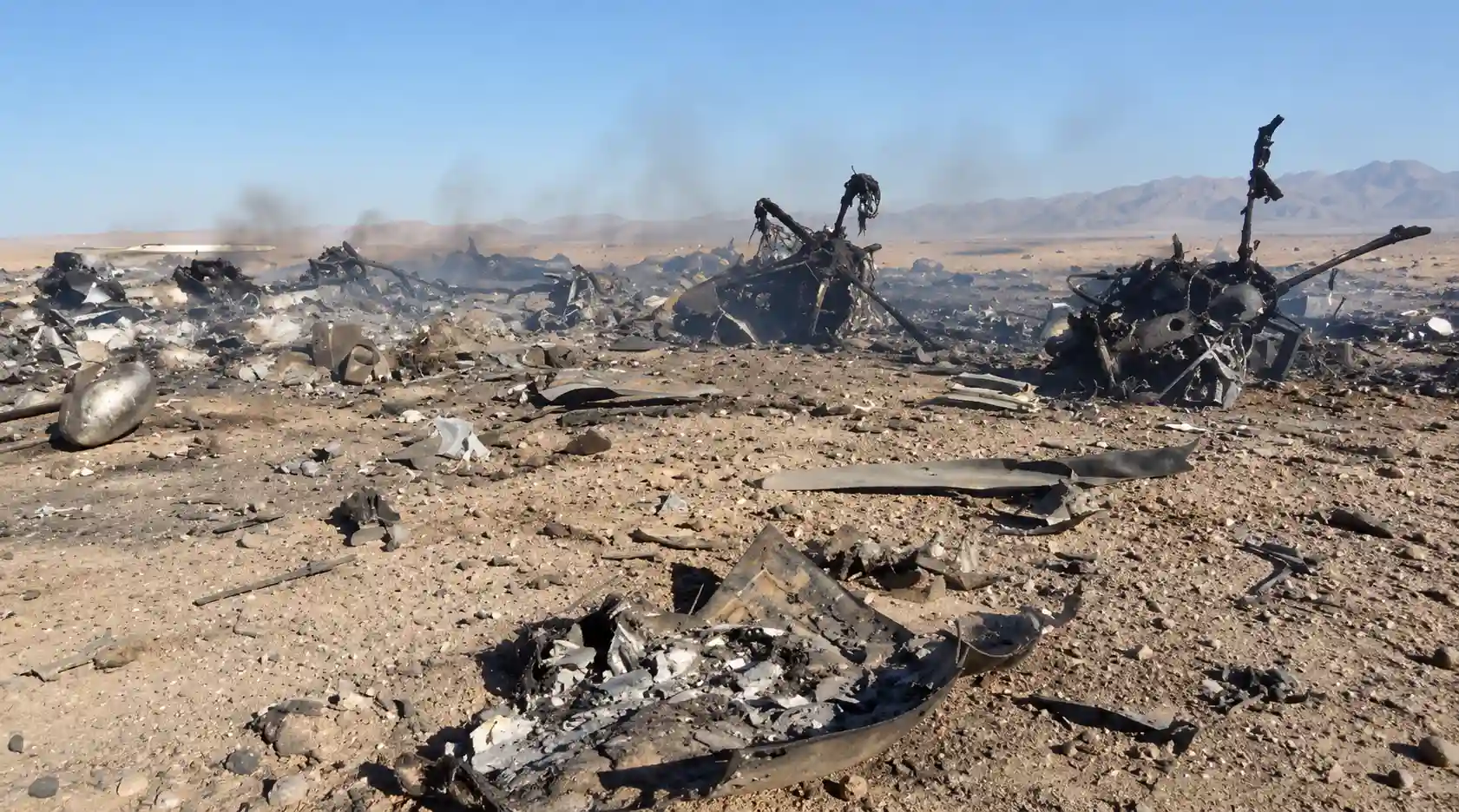
The extraction was not without its own severe complications. During the operation, two U.S. aircraft landed on a makeshift desert airstrip and became inextricably bogged down in the sand. To prevent advanced military technology from falling into Iranian hands, U.S. forces intentionally destroyed the stranded aircraft before departing.
Bravo was successfully airlifted out of Iranian airspace as the sun rose on Easter Sunday, approximately 50 hours after the missile struck his jet.
The Aftermath and Legacy
News of the successful rescue reached the highest levels of the U.S. government. President Donald Trump addressed the nation shortly after the extraction, stating, "The United States Military pulled off one of the most daring Search and Rescue Operations in U.S. History, for one of our incredible Crew Office Members... who I am thrilled to let you know is SAFE and SOUND!".
Today, Bravo is undergoing extensive medical rehabilitation for his skeletal injuries. While the strategic implications of the Dude 44 mission and the loss of the F-15E will continue to be analyzed by military historians, the human element of the 50-hour evasion stands as a remarkable testament to specialized survival training and psychological endurance.
For Bravo, the narrative isn't just about his grueling climb up the mountain; it is about the vast, highly synchronized machinery that risked everything to bring him home. "It's a story of the teamwork, the training, of the faith, of the decisions and the leadership to do something that will live in history," Bravo said. "An example of what America's willing to do, in order to uphold our promise and leave no man behind".
Further reading and useful links
Reader questions
Frequently asked questions
What kind of jet was shot down over Iran?
A U.S. Air Force F-15E Strike Eagle, operating under the mission call sign 'Dude 44', was shot down by an Iranian shoulder-fired missile on April 2, 2026.
How did the US officer survive a 100 mph fall?
His parachute was damaged by the missile strike, causing him to hit the ground at 70-100 mph. He suffered a broken back, arm, and shoulder, but remarkably remained conscious and able to move.
Did the US deploy ground troops to Iran for the rescue?
Yes. To execute the final rescue of 'Bravo', more than 90 U.S. service members were deployed on the ground in Iran - the first such deployment of American ground troops in the country in 46 years.
Nexuswild welcomes factual corrections. Email [email protected] with evidence and the article URL.