
China’s electric-vehicle industry spent the past decade learning how to manufacture batteries, motors, power electronics, sensors and intelligent-driving systems at enormous scale.
Now some of the same companies are trying to use that industrial base to build something much harder: humanoid robots.
Xpeng, Xiaomi, Nio, Geely, BYD and other Chinese automotive groups are moving directly or indirectly into robotics as slowing EV growth and weaker profitability push companies to search for new sources of revenue. More than half of nearly 20 automakers worldwide that had entered humanoid robotics through internal development, investment or incubation by August were Chinese companies.
The shift is not simply a technology experiment.
For automakers, humanoid robots could reuse parts of the EV supply chain they have already spent billions of dollars developing. Motors, chips, batteries, cameras, artificial-intelligence software and manufacturing systems all have potential applications in robotics.
That makes China’s EV industry unusually well positioned to test whether humanoids can move from impressive demonstrations into mass-produced machines.
But it also raises a larger question.
Are carmakers building the next major industrial platform, or searching for a new growth story because the economics of China’s EV market have become increasingly difficult?
China’s EV boom is entering a harder phase
China remains the world’s largest electric-vehicle market, but competition has become brutal.
Years of aggressive investment created a dense field of manufacturers competing on price, range, software, charging speed and advanced driver-assistance systems.
That competition helped accelerate EV adoption, but it also compressed margins.
The average profit margin in China’s vehicle manufacturing sector fell to about 1.5% in the first half of 2026, according to industry data cited by analysts.
Slower growth is now forcing automakers to rethink what their technology companies can become.
Xpeng shares were down more than 45% for the year at the time of the reporting, while BYD shares had fallen more than 13% amid weaker sales.
Humanoid robotics offers a possible second growth curve.
Instead of selling only vehicles, an automaker could eventually sell intelligent machines into factories, warehouses, stores, hotels, offices and possibly homes.
For investors, that would transform the company from a car manufacturer into a broader physical-AI platform.
Xpeng is making the most aggressive move
Among major Chinese EV companies, Xpeng has placed one of the clearest bets on humanoid robots.
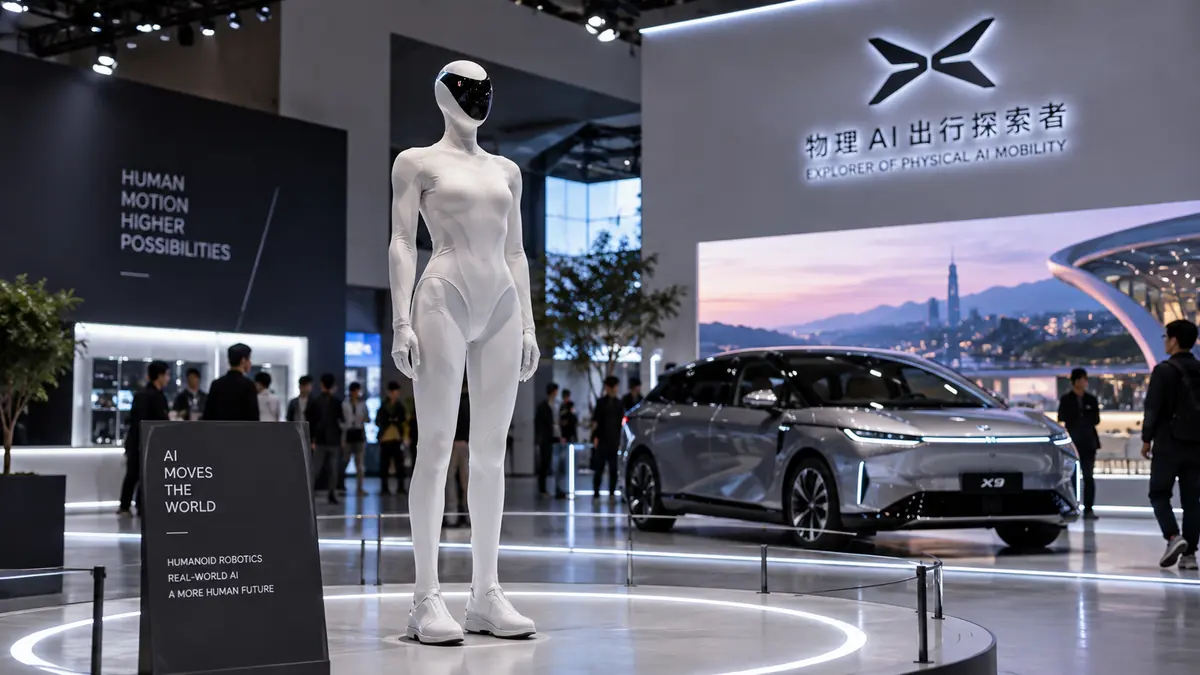
Its IRON robot is no longer being presented only as a research prototype.
Xpeng says it plans to begin mass production by the end of 2026, initially deploying robots inside its own stores and business locations before expanding sales into the broader Chinese and international markets in 2027.
The company has also separated robotics into a business significant enough to attract outside capital.
In August, Xpeng raised $900 million for its robotics operation, describing the transaction as the largest single financing round in China’s embodied-AI sector.
The deal valued Xpeng’s robotics business at more than $6.3 billion. That valuation was already approaching the estimated value assigned to Xpeng’s core EV operations by some market analysts.
That is a remarkable development.
A robotics division that has not yet established large external sales is already being valued like a major standalone technology company.
The market is effectively assigning value not only to current revenue, but to the possibility that humanoid robots become a large commercial category.
Why car companies may have an advantage
Humanoid robotics is often described as an AI problem.
In reality, it is also a manufacturing problem.
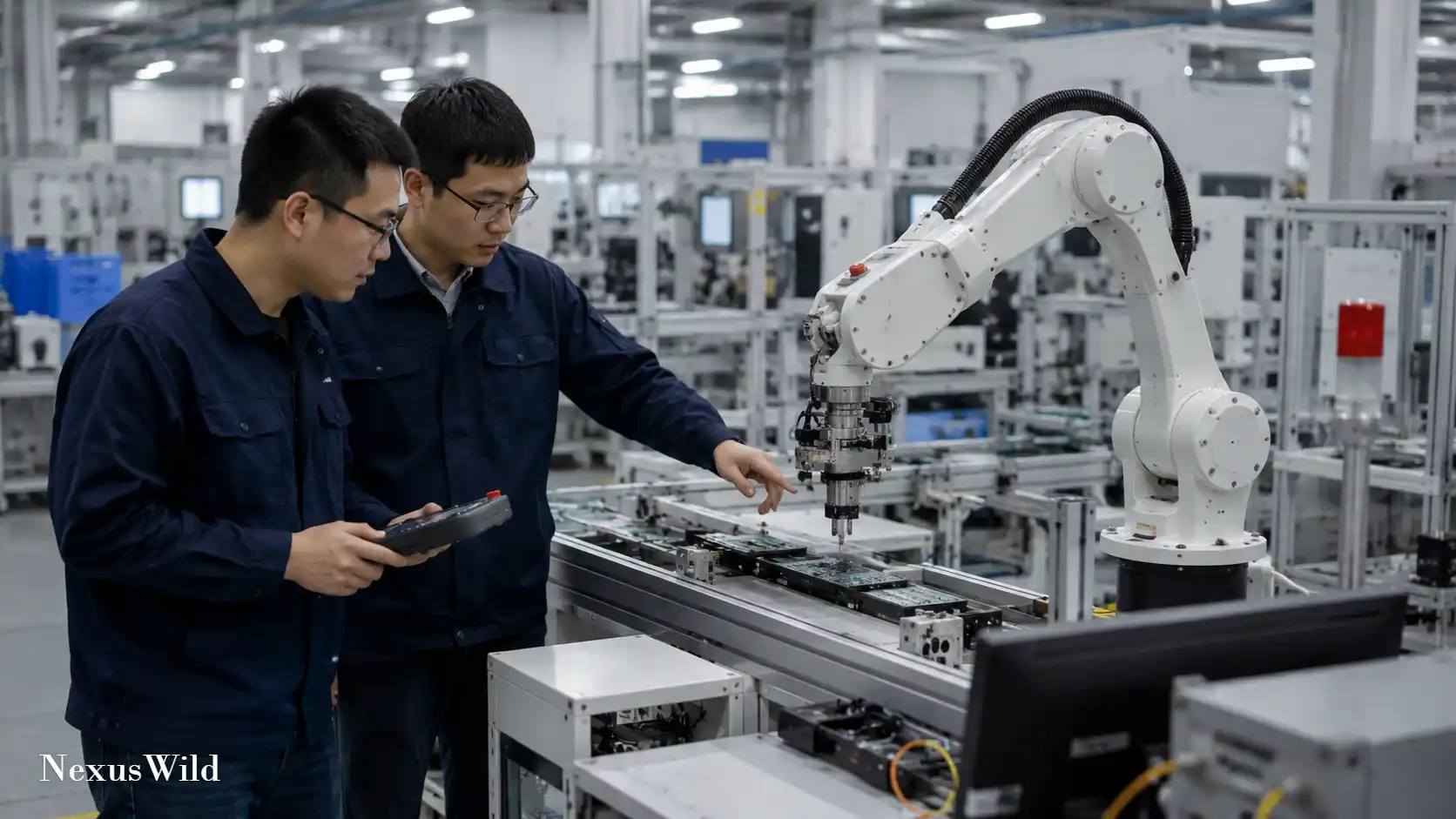
A useful robot requires motors, actuators, processors, batteries, cameras, wiring, cooling, structural components, safety systems and large amounts of software.
It then needs to be assembled repeatedly at consistent quality.
That is exactly the type of challenge large automakers already solve.
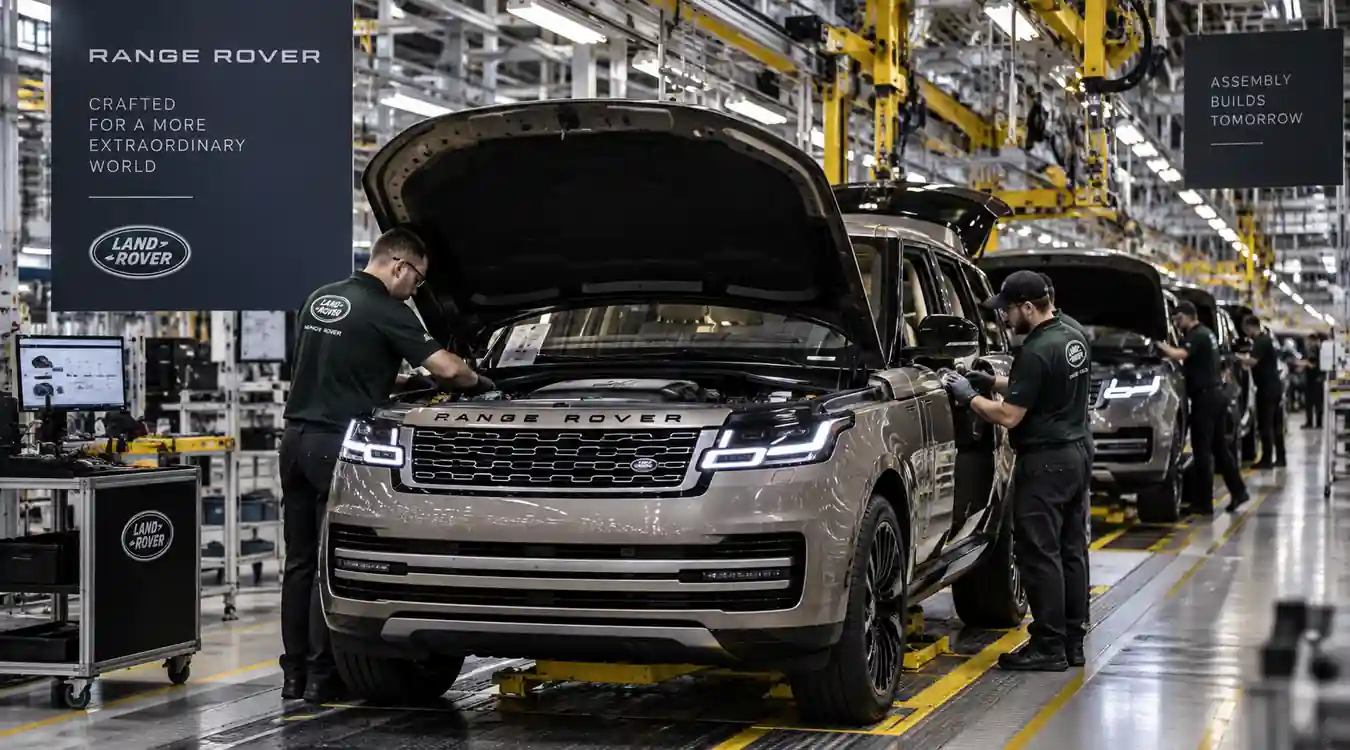
An EV company can purchase components at industrial volumes, run automated factories, manage thousands of suppliers and maintain products after they leave the production line.
That matters because the real challenge in humanoids is unlikely to be building one impressive robot.
It will be building 10,000 reliable robots that perform similarly, can be serviced and do not become prohibitively expensive.
China’s auto industry already has infrastructure designed for that scale.
Xpeng says most of the hardware can be reused
One of the strongest arguments for automakers entering robotics is technology reuse.
For Xpeng, as much as 85% of motors, chips and intelligent-driving software could potentially be shared with its humanoid programme, according to analysis surrounding the company’s robotics strategy.
The overlap is logical.
An electric car needs high-efficiency motors.
A humanoid needs motors.
An autonomous car needs cameras, sensors and environmental perception.
A humanoid needs similar capabilities.
An EV needs batteries and sophisticated power-management systems.
So does a mobile robot.
A smart vehicle also needs AI capable of understanding dynamic physical environments.
That same general technical foundation is valuable when a robot must navigate a warehouse, factory or retail location.
The economics become even more attractive if the company is already manufacturing many of those components at scale.
Factories could become the first real market
Chinese automakers also have another advantage: they do not necessarily need outside customers immediately.
They can use robots themselves.
A humanoid developed by an automaker could begin working in the company’s own factories, stores or logistics facilities.
That creates a controlled environment for testing.
Instead of asking a household customer to trust an experimental robot immediately, an automaker can deploy hundreds of machines internally, monitor failures and collect operational data.
That data is extremely valuable.
Modern AI improves through experience and training data. A robot that spends thousands of hours performing repetitive physical tasks can generate examples of successful and failed actions.
Those examples can be used to improve future models.
The manufacturer becomes both the robot company and its first customer.
Xiaomi is taking a similar path
Xiaomi is another example of how the line between electronics, vehicles and robotics is becoming increasingly difficult to define.
The company entered the electric-car market only in 2024.
By 2026, it was already testing humanoid robots inside its own manufacturing facilities.
For Xiaomi, robotics fits naturally into a broader ecosystem.
The company already makes smartphones, connected-home devices and vehicles.
A capable robot could eventually become another intelligent device within that system.
The challenge is that moving from consumer electronics into cars is already difficult.
Moving from cars into general-purpose humanoids introduces another layer of complexity.
Nio is approaching robotics through investment
Not every Chinese EV maker is building its own humanoid from scratch.
Nio has pursued the sector partly through investment.
Its venture arm has backed robotics companies including LimX Dynamics and Acorn Robot, giving Nio exposure to the technology without requiring every capability to be developed internally.
That approach may become common.
Large automakers can provide capital, manufacturing knowledge, supply chains and commercial deployment environments.
Specialized robotics startups can focus on motion control, dexterity, robot learning and hardware design.
The result could be a network of partnerships rather than every automaker building a completely independent platform.
BYD and Geely also have obvious reasons to watch closely
BYD has one of the most vertically integrated manufacturing systems in the global auto industry.
It produces batteries, electronics and key vehicle components at enormous scale.
That gives it many of the industrial capabilities needed to manufacture robots economically if the technology becomes commercially viable.
Geely is also moving toward robotics and physical AI.
The opportunity for both companies is similar: use existing manufacturing capability to enter a potentially larger automation market.
The strategic question is not whether they can build hardware.
It is whether they can develop software sophisticated enough to make the hardware useful.
Driving software does not automatically become robot intelligence
This is one of the biggest weaknesses in the entire auto-to-robot thesis.
A self-driving system and a humanoid robot both need perception and decision-making, but their jobs are very different.
A car operates mainly in a structured transportation environment.
Its most important actions involve steering, braking, acceleration and navigation.
A humanoid may need to recognize hundreds of objects, open doors, manipulate tools, pick up irregular items, maintain balance, understand spoken instructions and adapt when something moves unexpectedly.
The software problem is much broader.
Transferring autonomous-driving algorithms directly into humanoid robotics is therefore not straightforward.
Software designed for intelligent vehicles still has to be adapted to much more complex humanoid environments.
Hardware reuse may be relatively easy.
Intelligence reuse may not be.
The external market is still unproven
Another problem is demand.
Automakers can place robots inside their own factories, but internal deployment does not prove that outside customers will buy them at scale.
As of the reporting period, there was still limited evidence of large confirmed external orders from the major automakers entering humanoid robotics, and clear guidance on meaningful robotics revenue remained scarce.
That is important because robotics demonstrations can create unrealistic expectations.
A robot walking across a stage is not the same as a robot operating eight hours a day.
A robot folding one shirt under controlled conditions is not the same as managing thousands of different objects.
Commercial customers care about uptime, cost, safety, maintenance and return on investment.
Those metrics will determine whether humanoids become a real industry.
Even robot leaders are cautious
China already has dedicated robotics companies much further into the sector.
Unitree has become one of the country’s best-known humanoid manufacturers and completed a high-profile stock-market debut in Shanghai.
Yet even Unitree founder Wang Xingxing has warned that widespread commercialization could take years, with the industry’s equivalent of a major breakthrough moment potentially still far away.
That caution matters.
The robotics industry is attracting enormous capital before it has fully established what the dominant business model will be.
Some robots may succeed in factories.
Others may become logistics machines.
Some may enter hospitality or retail.
General-purpose home robots are likely to be a much harder problem.
China may still have the strongest manufacturing advantage
Even if humanoid adoption takes longer than expected, China has a structural advantage.
The country already dominates many supply chains needed for robotics, including batteries, motors, electronics and precision manufacturing.
Its automakers also know how to drive component costs down through scale.
That could matter more than producing the first spectacular prototype.
The eventual winner in humanoid robotics may not be the company with the best stage demonstration.
It may be the company capable of producing a useful machine at a price businesses can justify.
Chinese EV makers have already done something similar with electric cars.
They entered a technologically complex industry, built huge supply chains, reduced costs and turned products once considered premium into mass-market machines.
Now they are attempting to repeat that process with robots.
The difference is that a humanoid is far more mechanically and computationally demanding than an electric car.
The next phase of the EV industry may not be about cars
For now, Xpeng, Xiaomi, Nio, BYD and Geely remain primarily associated with vehicles.
But their robotics investments suggest a broader transformation.
The electric-car race forced these companies to become experts in motors, batteries, chips, perception systems, AI and automated manufacturing.
Those same capabilities can now be redeployed.
That does not guarantee humanoid robots will become successful businesses.
But it explains why Chinese automakers are moving so quickly.
The EV market gave them the technology.
Competition gave them the pressure.
Humanoid robotics is becoming the next place where they hope those capabilities can generate growth.
If that bet works, some of China’s largest future robotics companies may not begin as robotics companies at all.
They may begin as carmakers.
Reader questions
Frequently asked questions
Why are Chinese EV makers entering humanoid robotics?
Slower EV growth and compressed auto margins are pushing companies to find new revenue streams. Robotics also lets automakers reuse motors, chips, batteries, factories, suppliers and AI software developed for electric vehicles.
How much is Xpeng’s robotics business worth?
A 2026 financing valued Xpeng’s robotics operation at more than $6.3 billion after the company raised $900 million for the business.
When does Xpeng plan to mass-produce its IRON humanoid robot?
Xpeng has said it plans to begin mass production by the end of 2026, initially using robots in its own stores and business locations before broader commercialization.
What technology can EV makers reuse for humanoid robots?
Potentially reusable systems include electric motors, power electronics, batteries, chips, cameras, perception stacks, AI software, manufacturing lines and supplier networks.
Why are factories important for humanoid robotics?
Factories provide automakers with an internal first customer, a controlled deployment environment and large volumes of operational data that can be used to improve physical-AI models.
What is the biggest technical challenge for automakers building humanoids?
The hardest problem is likely software. Autonomous-driving systems are optimized for road environments, while humanoids need dexterity, balance, manipulation, multimodal perception and adaptation to far more complex physical tasks.
What is the financial risk in humanoid robotics?
Valuations can rise faster than commercial revenue. The sector still lacks broad evidence of large external order books, stable unit economics and mature recurring robotics revenue.
Nexuswild welcomes factual corrections. Email [email protected] with evidence and the article URL.