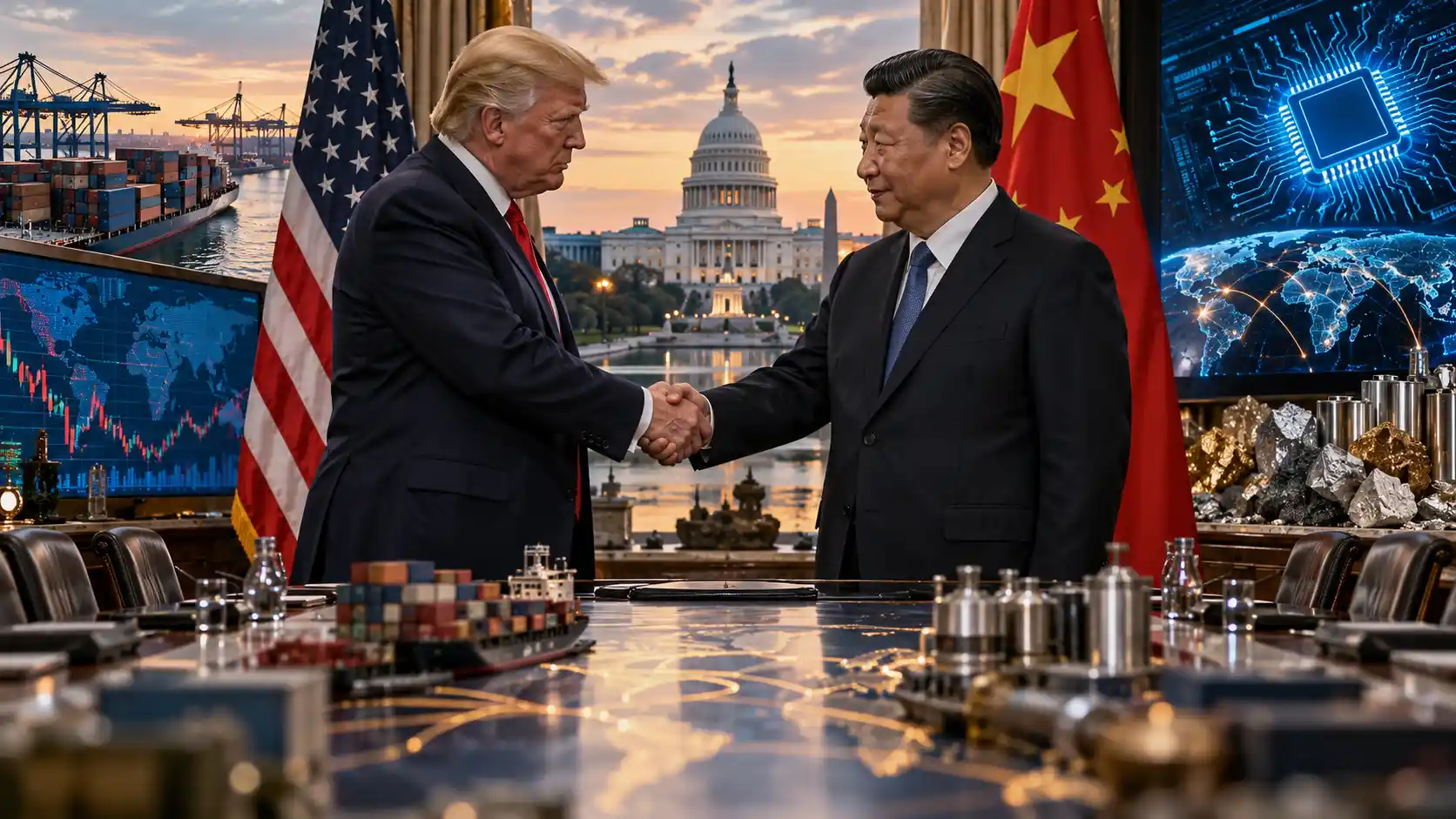

WASHINGTON, Sept. 24, 2026 - The White House meeting between U.S. President Donald Trump and Chinese President Xi Jinping sits at the center of several supply chains that shape the global economy: semiconductors, electric vehicles, agriculture, aerospace, artificial intelligence and critical minerals.
Xi is in the United States from September 23 to 25 for a state visit. The White House confirmed a formal state arrival ceremony for September 24, while China’s Foreign Ministry said the visit would include in-depth discussions on major bilateral and global issues.
The atmosphere is more stable than during the most confrontational phase of the tariff dispute, but the underlying economic competition remains. The two governments are still trying to manage tariffs, market access, investment controls, technology restrictions and strategic dependencies at the same time.
That is why the summit matters far beyond Washington and Beijing.
A change in policy between the world’s two largest economies can move orders for aircraft, change soybean flows, affect semiconductor supply chains, influence electric-vehicle investment and alter the availability of rare-earth materials used in everything from consumer electronics to defence systems.
As of publication, final summit outcomes had not yet been fully announced.
The more useful way to understand the meeting is therefore to map the industries exposed to the decisions being negotiated.
The economic relationship is still enormous
Despite years of tariffs and attempts to diversify supply chains, the United States and China remain deeply connected through trade.
U.S. Census Bureau data show that American goods exports to China totalled about $65.2 billion from January through July 2026.
Imports from China reached about $156.4 billion over the same period.
That left a U.S. goods deficit with China of about $91.2 billion through July.
The numbers are below earlier peaks, but they are still large enough to show that the relationship has not been economically severed.
The pattern is important.
The two countries are reducing dependence in selected strategic industries while continuing large-scale trade in ordinary goods.
The U.S.-China Board of Trade established earlier in 2026 reflects that distinction by creating a forum for non-sensitive trade.
In practice, the separation is difficult because many technologies have both commercial and strategic uses.
Trade remains the foundation of the talks
The U.S. Trade Representative said ahead of the summit that American officials would continue monitoring implementation of recent commitments, facilitating trade in non-sensitive goods and seeking improved market access for U.S. farmers, manufacturers and workers.
Washington is therefore not treating all trade with China as equally sensitive.
The objective is to keep ordinary commerce moving while maintaining restrictions in areas tied to national security, strategic technology and critical supply chains.
China has publicly called for a relationship based on cooperation, managed competition and controlled differences.
Xi said on arrival that the two countries should become partners rather than adversaries and seek a stable relationship with cooperation as the main direction.
Those positions do not eliminate structural disagreements.
They define the boundaries within which the summit is taking place.
Semiconductors remain the hardest technology issue
No industry captures the U.S.-China economic relationship more clearly than semiconductors.
Advanced chips are simultaneously commercial products, AI infrastructure and national-security assets.
The United States has spent years tightening controls on advanced semiconductor equipment, high-end computing hardware and technologies that could support military or intelligence applications.
China has responded by investing heavily in domestic semiconductor production and reducing dependence on foreign suppliers where possible.
The May 2026 bilateral agreements did not remove this strategic competition.
They focused more heavily on trade, agriculture, aircraft, critical minerals and institutional dialogue.
That means chips remain a separate and more difficult track.
For semiconductor companies, the business impact depends on which parts of the technology stack remain restricted.
A company selling mature-node chips for industrial equipment faces a different policy environment from a company selling leading-edge AI accelerators or advanced manufacturing tools.
If restrictions remain tight at the frontier, companies will continue designing supply chains around separate technology blocs.
If rules become clearer for lower-risk products, some ordinary semiconductor trade could become easier.
The key distinction is between commercial semiconductor demand and technology judged to have strategic military or AI significance.
AI is becoming its own diplomatic category
Artificial intelligence is moving beyond trade policy and into direct state-to-state diplomacy.
The United States and China are two of the largest centres of frontier AI development, compute infrastructure and AI deployment.
Competitive questions include access to advanced chips, data-centre capacity, model development and the rules governing potentially sensitive applications.
Cooperative questions are different.
Governments may still have incentives to discuss safety, crisis communication and misuse risks even while competing over AI leadership.
That creates an unusual negotiating structure.
The two countries can be intense commercial and strategic competitors in AI while still having reasons to establish limited communication around safety.
For technology companies, any movement matters because AI policy increasingly affects chip access, cloud infrastructure, model deployment and cross-border investment.
Rare earths are the most visible supply-chain leverage point
Critical minerals are another major issue because the United States remains dependent on Chinese supply in several categories.
U.S. Geological Survey data show how concentrated that dependence can be.
China accounted for about 71% of global mined rare-earth production in 2024 and an even larger share of processing.
USGS data also show Chinese dominance in several other strategic materials, including gallium, tungsten, graphite, indium and magnesium.
For the United States, the issue is not only access to mined material.
Processing is equally important.
A country can have mineral deposits and still depend on foreign refining, separation or magnet manufacturing.
That is why critical-mineral negotiations affect far more than mining companies.
Rare-earth magnets are used in electric motors, industrial machinery, consumer electronics, defence equipment and many clean-energy systems.
Supply restrictions can therefore move costs across entire industries.
The May 2026 agreement included a Chinese commitment to address U.S. concerns around rare-earth supply and restrictions on production and processing equipment.
The current summit is important because implementation matters more than the wording of the commitment.
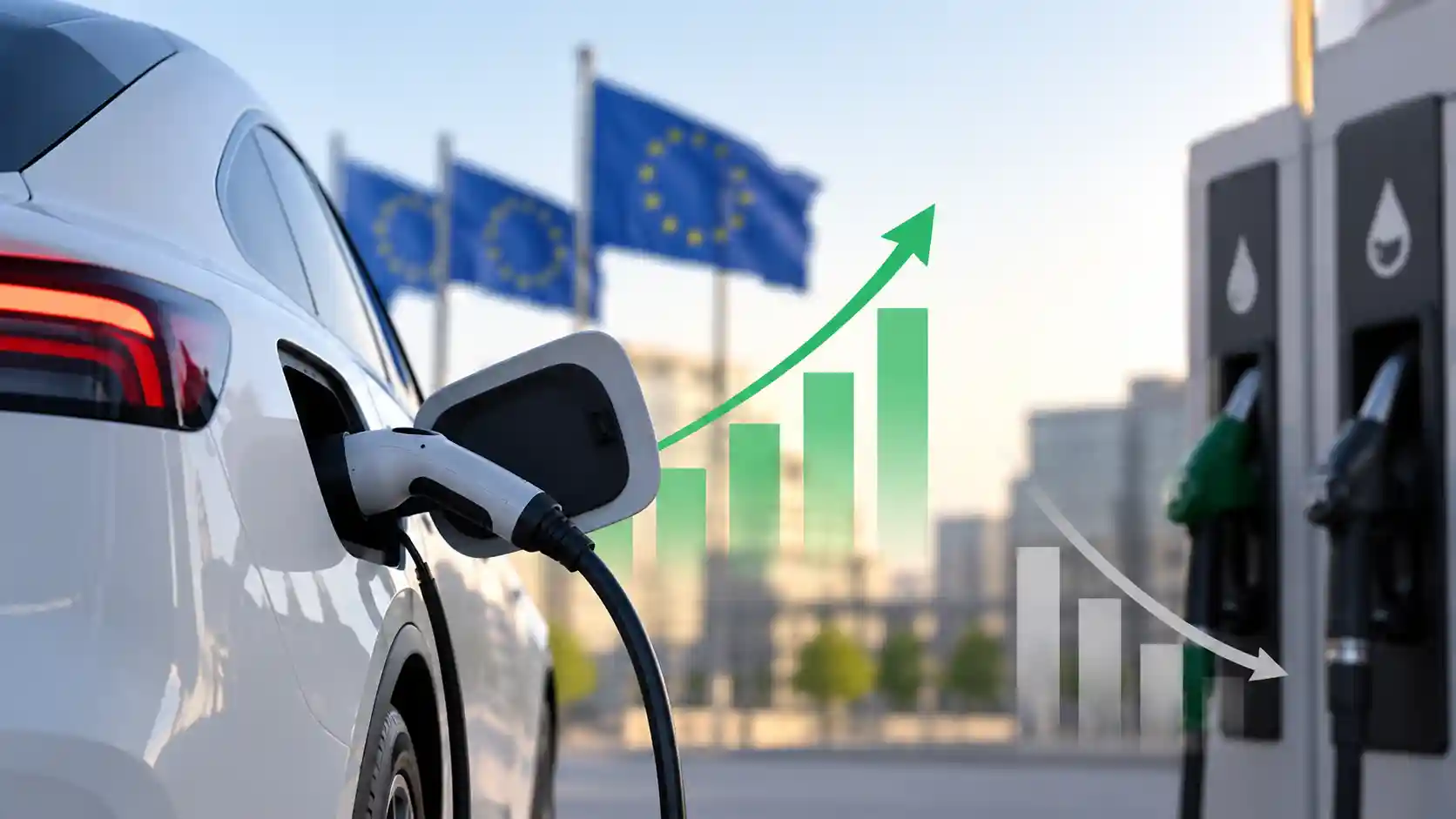
Electric vehicles sit between trade policy and industrial policy
Electric vehicles are one of the clearest examples of how trade and industrial policy overlap.
The United States is concerned about dependence on Chinese batteries, components and vehicle supply chains.
China has built enormous scale in EV manufacturing, batteries, cathode materials, anode materials and processing of several critical minerals.
That creates a competitive problem for U.S. manufacturers.
Lower-cost Chinese production can reduce consumer prices, but it can also place pressure on domestic manufacturers and local supply chains.
The policy question is therefore not simply whether Chinese EVs should be sold in the United States.
It is how much of the battery and component supply chain can remain integrated without creating a strategic dependence.
For global automakers, policy changes affect where vehicles are built, which battery suppliers qualify, where components are sourced and which markets remain open.
The effect extends beyond American and Chinese brands.
Any multinational manufacturer producing in both countries has to design around both regulatory systems.
Agriculture remains one of the easiest areas for measurable commitments
Agriculture is different from AI or semiconductors because purchases can be counted directly.
Earlier 2026 agreements included commitments for China to purchase at least $17 billion per year in U.S. agricultural products during 2026, 2027 and 2028, in addition to earlier soybean commitments.
China also renewed access for hundreds of U.S. beef facilities and resumed poultry imports from eligible states.
This gives agriculture a special role in U.S.-China diplomacy.
It is politically important, commercially measurable and less technologically sensitive than advanced chips.
But implementation still matters.
A commitment to purchase agricultural goods affects farm income only when shipments actually happen.
Crop prices, domestic Chinese demand, exchange rates and alternative suppliers can all affect how quickly targets are reached.
For soybean, corn, meat and other agricultural markets, the summit is therefore less about abstract strategy and more about physical trade flows.
Aerospace is a direct test of whether major commercial deals can survive strategic tension
The May 2026 package also included an initial Chinese commitment to purchase 200 U.S.-made Boeing aircraft.
That was significant because aircraft orders are large, long-term industrial contracts.
They support manufacturing, engines, avionics, maintenance and thousands of suppliers.
But aircraft purchases also require financing, regulatory approvals, airline demand and delivery slots.
An announcement is not the same thing as final deliveries.
The current summit matters because aerospace is a useful indicator of whether the relationship can support long-duration commercial commitments even while strategic rivalry continues.
If major aircraft transactions proceed, it suggests both governments are willing to protect some high-value commercial relationships from broader political tensions.
If they stall, it shows how difficult it is to separate commerce from geopolitics.
Critical minerals connect technology, EVs and defence
Rare earths are not a separate industry story.
They connect several of the summit’s major themes.
AI data centres require electrical equipment and advanced electronics.
EVs rely on motors, batteries and power electronics.
Aerospace and defence systems use specialized magnets and high-performance materials.
That means a restriction on one mineral can affect multiple sectors at once.
USGS research shows that China is the leading producer of dozens of mineral commodities and holds especially large shares in materials such as gallium, graphite, rare earths and tungsten.
This concentration creates negotiating leverage because alternative supply chains take years to develop.
New mines require permitting.
Processing plants require capital.
Magnet manufacturing requires specialized knowledge.
The United States and its partners are investing in alternatives, but diversification is a long-duration industrial project.
That makes near-term access to Chinese supply economically important even while long-term policy aims to reduce dependence.
Iran adds an energy dimension
The summit is also taking place against continuing tension around Iran and the Middle East.
That matters economically because China is a major energy importer while the United States is deeply involved in regional security policy.
Earlier in 2026, Trump and Xi agreed that Iran should not acquire a nuclear weapon and called for reopening the Strait of Hormuz.
The current discussions therefore link geopolitics directly to economics.
A disruption in the Gulf can raise oil prices.
Higher oil prices increase transport and manufacturing costs.
China is especially sensitive because of its dependence on imported energy.
The United States is sensitive because energy prices feed into inflation and household costs.
For markets, Iran is therefore not a separate diplomatic issue.
It is part of the economic risk surrounding the summit.
The summit can affect investment without producing a grand deal
Businesses do not need a dramatic treaty to change behaviour.
Stability itself has economic value.
A company deciding where to build a factory, sign a supplier contract or place a long-term order has to estimate the probability of tariffs, export controls, sanctions or market restrictions changing.
When policy becomes unpredictable, companies hold more inventory, duplicate suppliers or delay capital spending.
When policy becomes more stable, even without full agreement, companies can make longer-duration decisions with greater confidence.
This is why the state visit matters even if it produces only incremental outcomes.
A clearer framework for non-sensitive trade, rare-earth access, agricultural purchases or investment screening can affect corporate decisions immediately.
The global impact goes beyond the United States and China
A U.S.-China policy change rarely stays bilateral.
Semiconductor suppliers in East Asia are affected by chip rules.
Commodity exporters are affected by Chinese demand.
European automakers are affected by EV and battery policy.
Agricultural exporters compete with U.S. farm products for Chinese purchases.
Countries developing rare-earth projects are affected by Chinese export policy and global prices.
Manufacturers in India, Southeast Asia and Mexico are affected by supply-chain diversification.
The structure of U.S.-China trade influences where the next factory is built, which ports handle the cargo, where investment flows and which technologies are treated as ordinary commercial goods rather than strategic assets.
What is confirmed as of publication
Xi is in the United States for a state visit from September 23 to 25.
Trump personally greeted Xi and Peng Liyuan at Joint Base Andrews on September 23.
The White House scheduled the formal state arrival ceremony and state dinner for September 24.
The two governments entered the meeting with earlier 2026 commitments covering non-sensitive trade, agriculture, rare earths, aviation and investment dialogue.
U.S. officials said before the summit that implementation of recent commitments, trade in non-sensitive goods and market access remained priorities.
China said it wanted expanded cooperation and better management of differences.
Final summit outcomes had not yet been fully announced when this article was prepared.
What industries should watch next
For chips, the key question is whether existing technology restrictions remain unchanged or become more clearly segmented between strategic and ordinary commercial products.
For AI, the issue is whether the governments create any formal dialogue on safety, model access or crisis communication.
For EVs, the relevant areas are tariff treatment, battery supply chains and investment restrictions.
For agriculture, the measure is actual purchase volumes rather than political language.
For aerospace, the focus is whether announced aircraft purchases turn into binding orders and deliveries.
For critical minerals, implementation is everything: export approvals, processing equipment access and physical shipment volumes.
These are measurable outcomes.
They matter more than summit ceremony.
The strict conclusion
The Trump-Xi Washington summit is best understood as an attempt to manage economic interdependence without ending strategic competition.
The United States wants continued access to Chinese markets for agriculture, aircraft and other non-sensitive goods while reducing vulnerability in advanced technology and critical minerals.
China wants stable access to the U.S. market, fewer barriers to trade and investment, and more room for its technology industries to develop.
Those goals overlap in some sectors and conflict directly in others.
That is why one summit cannot resolve the relationship.
But it can change the operating conditions for global business.
The sectors most exposed are clear: semiconductors, AI, electric vehicles, agriculture, aerospace and critical minerals.
For each one, the relevant question is not whether Washington and Beijing suddenly become partners or adversaries.
They are already both.
The question is where the line between cooperation and strategic restriction is drawn next.
Reader questions
Frequently asked questions
When is Xi Jinping visiting the United States in September 2026?
China's Foreign Ministry says Xi Jinping's state visit runs from September 23 to September 25, 2026.
What are the main economic issues in the Trump-Xi Washington summit?
The central economic issues include trade implementation, market access, artificial intelligence, semiconductor restrictions, critical minerals, agriculture and major commercial commitments such as aircraft purchases.
How large is U.S.-China goods trade in 2026?
U.S. Census data show about $65.2 billion of U.S. goods exports to China and $156.4 billion of imports from China from January through July 2026.
Why are rare earths important in the summit?
China holds a dominant position in mining and especially processing of several critical minerals. These materials are used in electric motors, electronics, defence systems, industrial equipment and clean-energy technologies.
Why do semiconductor companies care about the summit?
U.S. technology restrictions distinguish between ordinary commercial semiconductor trade and advanced chips or equipment considered strategically sensitive. Any clarification or change can affect supply chains, licensing and investment.
What agriculture commitments already exist between the U.S. and China?
Earlier 2026 agreements included Chinese commitments to purchase at least $17 billion per year of U.S. agricultural products during 2026, 2027 and 2028, in addition to earlier soybean commitments.
Has the summit produced a final new trade deal?
As of this article's publication on September 24, 2026, final summit outcomes had not yet been fully announced. Existing commitments and current negotiating issues should not be presented as a completed new agreement.
Nexuswild welcomes factual corrections. Email [email protected] with evidence and the article URL.